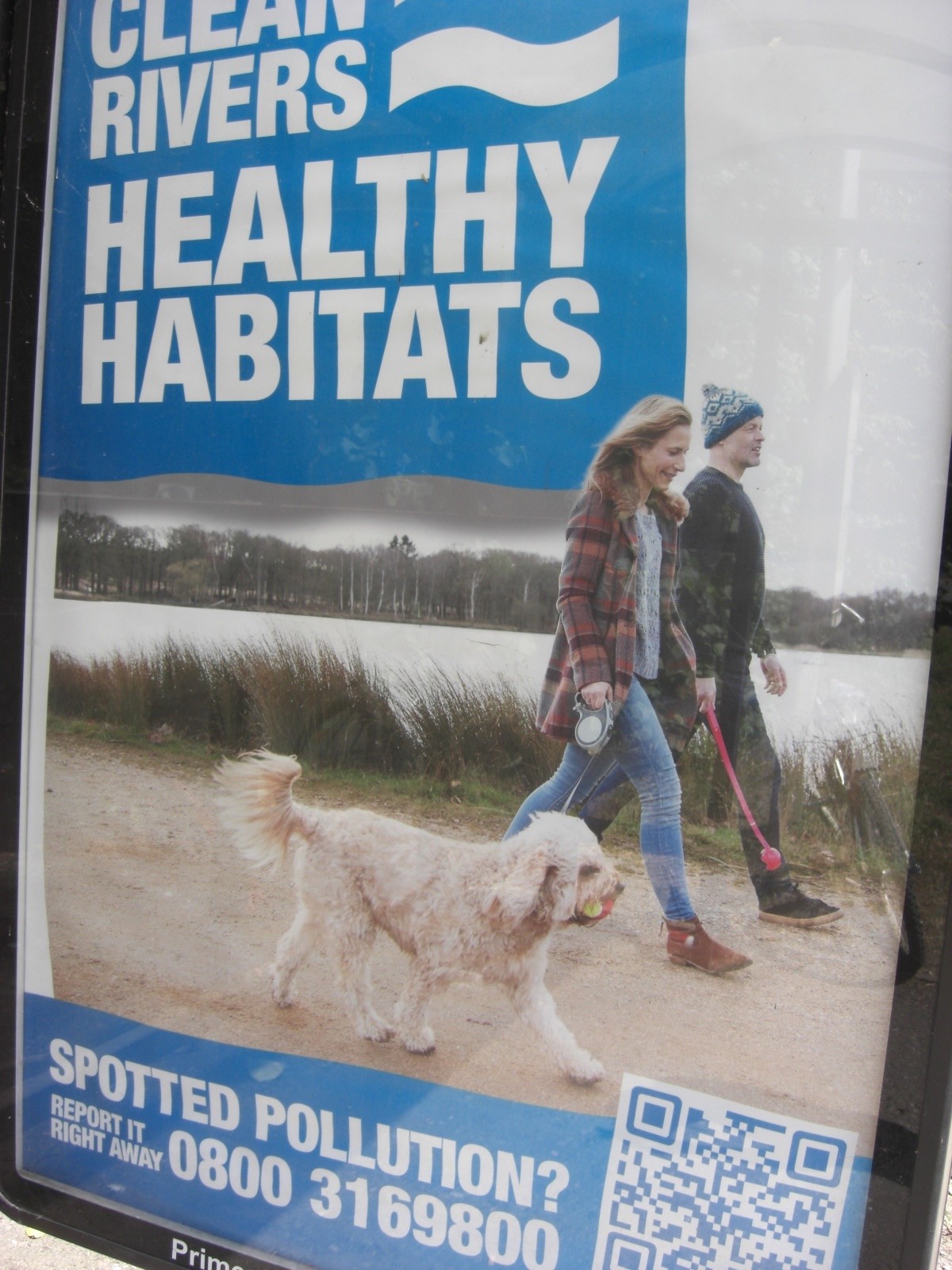
Poster on the Siemens Bus shelter on the Oxford road, June 2026. Photo K. Martin
In the June 2026 issue of British Wildlife, Hannah Bourne-Taylor (best known for her campaign for swift bricks in new-builds) reviewed some of the recent scientific evidence for the impact of pet pesticides on freshwater invertebrates. Her conclusion is stark:
‘…the active ingredients in hundreds of tick and flea treatments are pesticides so notorious that they read like police lists of most wanted criminals.’
This is not simply the spin of a prominent environmental campaigner: Prof Alistair Boxall of the University of York recently told the House of Lords ‘Pet Parasite Medication Inquiry’ that,
‘if we took all the ecological data on molecules and ranked them, these would be some of the most toxic chemicals ever assessed.’
These treatments are not medicines, they are pesticides.
We need to declare an interest. As a companion to our long-term Water Quality surveys, the NRN initiated an ongoing community ‘Bugs in Brooks’ project, where we sample water from brooks and streams around Eynsham yearly in order to identify the freshwater invertebrates who live in them. By using a quantitative index, we then get an indication of the biodiversity and abundance in our water, which reflects the water quality.
Dr Maarten van Hardenbroek and Young Assistant collecting water samples from the Limb Brook.Photo C Bass
The hands-on, Wellington-boots-on Workshops are led by a former Eynsham luminary, Dr Maarten van Hardenbroek, an expert on how changing environmental conditions influence lake ecosystems. He focuses on invertebrate communities that are highly sensitive to climate, nutrients, hydrology, and pollution. Freshwater invertebrates evolved in clean water, but they are now threatened by pollution from a multitude of sources, one of which is the pesticides used for flea and tick treatments in our pets, like fipronil, imidacloprid, diazinon and more recently, isoxazoline.
Some of Eynsham's remarkable aquatic invertebrates discovered during our 'Bugs in Brooks' workshops.Photo collage by Lucy Dickinson.
Fipronil and imidacloprid are a class of pesticides called neonicotinoids (‘neonics’), which are now banned for use in agriculture in the UK and EU, because of the overwhelming evidence of their damage to wildlife. Like isoxazoline, neonics are neurotoxins and interfere with synapic transmission. They also adversely affect mitochondria, which are the powerhouses of our cells. Over 5 000 scientific papers have been published on the effects of fipronil (which is largely used in veterinary applications, not agriculture), and over 10 000 publications on imidacloprid, yet neonics are not banned in the UK for the treatment of ectoparasites in our pets. Typically, these pesticides are applied topically as drops on the neck skin of the cat or dog. Homes with treated pets show, unsurprisingly, that these pesticides are found on the hands of the pet owners and in house dust, pet's bedding, and mop water. Presumably groomers and vets are also exposed to these pesticides long-term. Of course, washing pets, clothes, hands and bedding only transfers the pesticides to the sewage system and thence into our rivers.
Flea, Ctenocephalides canis
'The strength and beauty of this small creature, had it no other relation at all to man, would deserve a description…' Robert Hooke
Drawn by Robert Hooke for his monograph Micrographia published in 1665
Image courtesy The Royal Society.
The UK has about 12 -13 million dogs and 10 -11 million cats, most of which have been treated with an estimated 27 tonnes of fipronil and 33 tonnes of imidacloprid since these treatments were first introduced for flea and tick control in the 1990s (2.9 tonnes of imidacloprid were sold as a pet treatment in 2024; an estimate 9.4 million spot doses of imidacloprid were applied to dogs in 2022). Because these neonics are water-soluble, they can be washed off when a spot-treated pet is bathed, or when the pet enters freshwater - and what dog worth the wag can resist an opportunity to plunge into a stream, river, pond or lake, even without their stick-throwing owner’s encouragement? Sewage treatment processing does not remove pesticides, so whatever is in the pet’s bathwater also ends up as part of the toxic mix entering our rivers from sewage plant discharges. Further, some of the breakdown products of the pesticides are also toxic.
Non-target insects, like this comma butterfly feeding on devil's bit scabious, may be poisoned by the pesticides used in pet flea products. When our rare floodplain meadows flood, they are drenched with pesticides in the rivers. These toxins can be taken up by meadow plants, so exposing feeding insects to the toxins.Photo Jodie Baker
There is strong evidence that non-target insects and birds are adversely affected by neonics, which are also thought to be a risk to humans (hence the use of neonics in food-producing animals is strictly banned). Despite the recent agricultural ban (imidacloprid, in particular, was only completely banned for agricultural use in the UK in 2025), neonics persist in most of our water-courses as a result of their continued use in veterinary medicine. Of course, pesticides of many different types are still used for crops and for animals – sheep dips for example – and these inevitably enter water courses.
Veterinary products are the principal source of fipronil in water courses. More than that, a number of these products, such as fipronil and isooxazoline, are per- and polyfluoroalkyl (PFAS) chemicals, also known as ‘forever chemicals’ because of their persistence. Neonics can have a half-life in soil for 1000 days. This is very bad news, because the leaching of the neonics from agricultural fields into streams and rivers may continue long after the application of pesticides has stopped. Of course, the companies that benefit financially from the pollution damage they cause to the environment should pay for cleaning it up. In fact the producers of these products don't even have to assess the degree of damage they cause - that is left to the regulators to decide and it is clear from the House of Lords inquiry that this is typically a decision based on desk reviews.
The effluent from sewage works and run-off from farms continues to inject pesticides into the river and streams and keep their levels high, so ensuring the deletarious effects on aquatic life remain. Neonics and other pesticides, being indiscriminate, disrupt food webs so that not just invertebrates, but species like fish and birds that depend on invertebrates as a vital food source are adversely affected.
The data from our ‘Bugs in Brooks’ surveys, together with historic data from the Environment Agency, shows a relentless decline in number and abundance of aquatic invertebrate species in Eynsham's water courses. This is consistent with many studies, e.g. recent research at Cardiff University reported that sites with increased concentrations of imidacloprid were associated with reductions of over 90% in the abundances of species of mayflies and caddisflies. Similar findings have been reported at other sites, although it is worth noting a contrary conclusion that came from a review of historic data from the Environment Agency. The suprising conclusion was that there has been a siginficant increase in freshwater invertebrate diversity in England over the 30 year period from 1989 - 2018, despite the same agency reporting that overall the quality of English waterways is poor.
Long-term decline in number of species and abundance of aquatic invertebrates in Eynsham's streams. Data from Environment Agency and 'NRN's Bugs in Brooks Workshops. Graphs courtesy Dr. Maarten van Hardenbroek.
Confusingly, the advisory from the Veterinary Medicines Directorate (VMD) of the UK government is that the pet pesticides are safe and effective when used correctly. Safe for whom one might ask? One of the vets appearing before the House of Lords commission stated that the VMD’s own research showed the pesticides are not safe, even when ‘used correctly’. The vet added, ‘There are very serious questions about their potential risk to human health and about resistance, so I would argue that that is quite misleading communication. It is misleading the public about the safety of the products.’ i.e. don’t believe all that’s on the pet pesticide label.
So what’s to be done?
There are a number of levels for action.
At the level of pet owners, ‘gratuitous overuse’ should be avoided at all costs. Pets should be examined for fleas and ticks as it seems most pets don’t have ‘em – the data collected from a large number of vet practices showed that a tiny percentage of cats and dogs actually present with fleas. Levels of awareness of the knock-on effects of pet pesticides on the environment need to be raised.
At the level of professionals, the British Veterinary Association already recommends against blanket prophylactic treatments for fleas and ticks. i.e. vets are strongly advised to stop offering regular monthly treatments and instead assess the risk for the individual cat or dog of using pesticides. Vets should avoid prescribing topical products for pets which are likely to swim or be bathed.
At the government level, the ban on neonics and related neurotoxins that can enter water courses and soils should be total. Environmental monitoring of the concentrations of these pesticides in water courses and their effects of aquatic animals should be mandatory. Our ‘Bugs in Brooks’ project fills a gap that was left by the Environment Agency, whose ecologists used to, but no longer monitor aquatic vertebrates in the watercourses around Eynsham. Chemical/pharma companies must be made to provide an environmental risk-assessment for their pet products, which currently they are not legally required to do. And the polluter should be compelled to pay for any clean-up.
Can we restore the watercourses where we live and give all our freshwater plants and animals - and all who depend on them - a better habitat?
Lets try!
Kevan AC Martin
Selected citations
Bourne-Taylor H (2026) Under the surface: the impacts of parasite treatment for pets on freshwater invertebrates. British Wildlife 17: 469-474.
Buglife (2026) The effects of veterinary tick and flea treatments on freshwater invertebrates and ecosystems.
Buszewski, B., Bukowska, M., et al. (2019) A holistic study of neonicotinoids neuroactive insecticides—properties, applications, occurrence, and analysis. Environ Sci Pollut Res26, 34723–34740. https://doi.org/10.1007/s11356-019-06114-w
Hadley M, Rodwell L et al (2026) Occurrence, patterns and previously overlooked sources of three veterinary ectoparasiticides in rural and urban Welsh rivers. Environmental Pollution 394: 127713
Hallmann, C., Foppen, R. et al. (2014) Declines in insectivorous birds are associated with high neonicotinoid concentrations. Nature511, 341–343. https://doi.org/10.1038/nature13531
Klarich Wong KL, Webb DT, et al. (2026) Chlorinated byproducts of neonicotinoids and their metabolites: An unrecognized human exposure potential? Environmental Science & Technology Letters 394: 98-105.
Perkins, R., Glauser G., Goulson D. (2025) Swimming emissions from dogs treated with spot-on fipronil or imidacloprid: Assessing the environmental risk. https://doi.org/10.1002/vetr.5560
Powner MB., Salt TE et al (2016) Improving Mitochondrial Function Protects Bumblebees from Neonicotinoid Pesticides. PLoS ONE 11: e0166531 https://doi.org/10.1371/journal.pone.0166531
Shardlow, M.E.A. (2026) Flea Pollution Treatment Crisis – an Independent Review. Wildlife and Countryside Link, London
Siwen Li S., Yang Cao Y., et al (2021) Neonicotinoid insecticides triggers mitochondrial bioenergetic dysfunction via manipulating ROS-calcium influx pathway in the liver, Ecotoxicology and Environmental Safety. 224: 112690 https://doi.org/10.1016/j.ecoenv.2021.112690.
Sur R., Stork, A. (2003) Uptake, translocation and metabolism of imidacloprid in plants. Bulletin of Insectology, 56, 35–40
Tassin de Montaigu C., Glauser G., et al (2025) High prevalence of veterinary drugs in bird's nests. Science of The Total Environment. 964: 178439, https://doi.org/10.1016/j.scitotenv.2025.178439.
Wie F., Cheng, F., et al (2024) Imidacloprid affects human cells through mitochondrial dysfunction and oxidative stress, Science of The Total Environment 951: 175422. https://doi.org/10.1016/j.scitotenv.2024.175422.
Woodcock BA., Bullock JM., et al., (2017) Country-specific effects of neonicotinoid pesticides on honey bees and wild bees Science 356, 1393–1395
Qu Y, Keller V, et al. (2023) Significant improvement in freshwater invertebrate biodiversity in all types of English rivers over the past 30 years. Science of the Total Environment, DOI: 10.1016/j.scitotenv.2023.167144
Zhang D., Lu S. (2022) Human exposure to neonicotinoids and the associated health risks: A review. Environment International 163 :107201,
 Dr Maarten van Hardenbroek and Young Assistant collecting water samples from the Limb Brook.
 Some of Eynsham's remarkable aquatic invertebrates discovered during our 'Bugs in Brooks' workshops.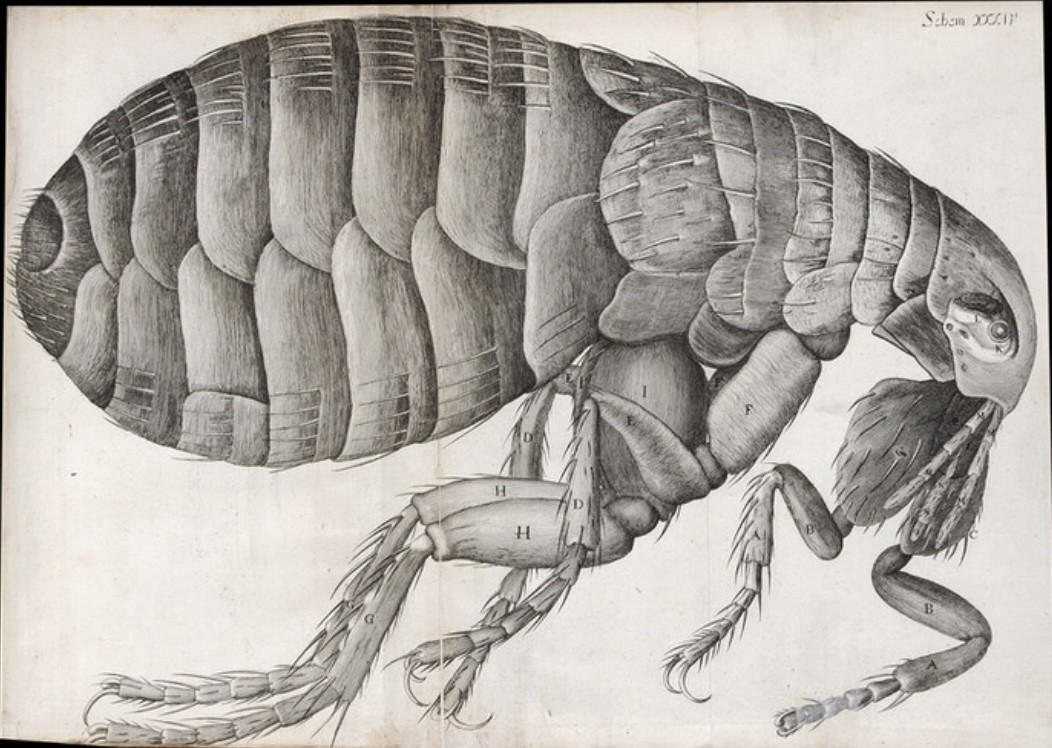
 Non-target insects, like this comma butterfly feeding on devil's bit scabious, may be poisoned by the pesticides used in pet flea products. When our rare floodplain meadows flood, they are drenched with pesticides in the rivers. These toxins can be taken up by meadow plants, so exposing feeding insects to the toxins.
 Long-term decline in number of species and abundance of aquatic invertebrates in Eynsham's streams. Data from Environment Agency and 'NRN's Bugs in Brooks Workshops. Graphs courtesy Dr. Maarten van Hardenbroek.
 Pollinator at work in Eynsham